CASCADE | Immersive Disaster Response
Coordinated Agency Simulation for Catastrophic and Disaster Events
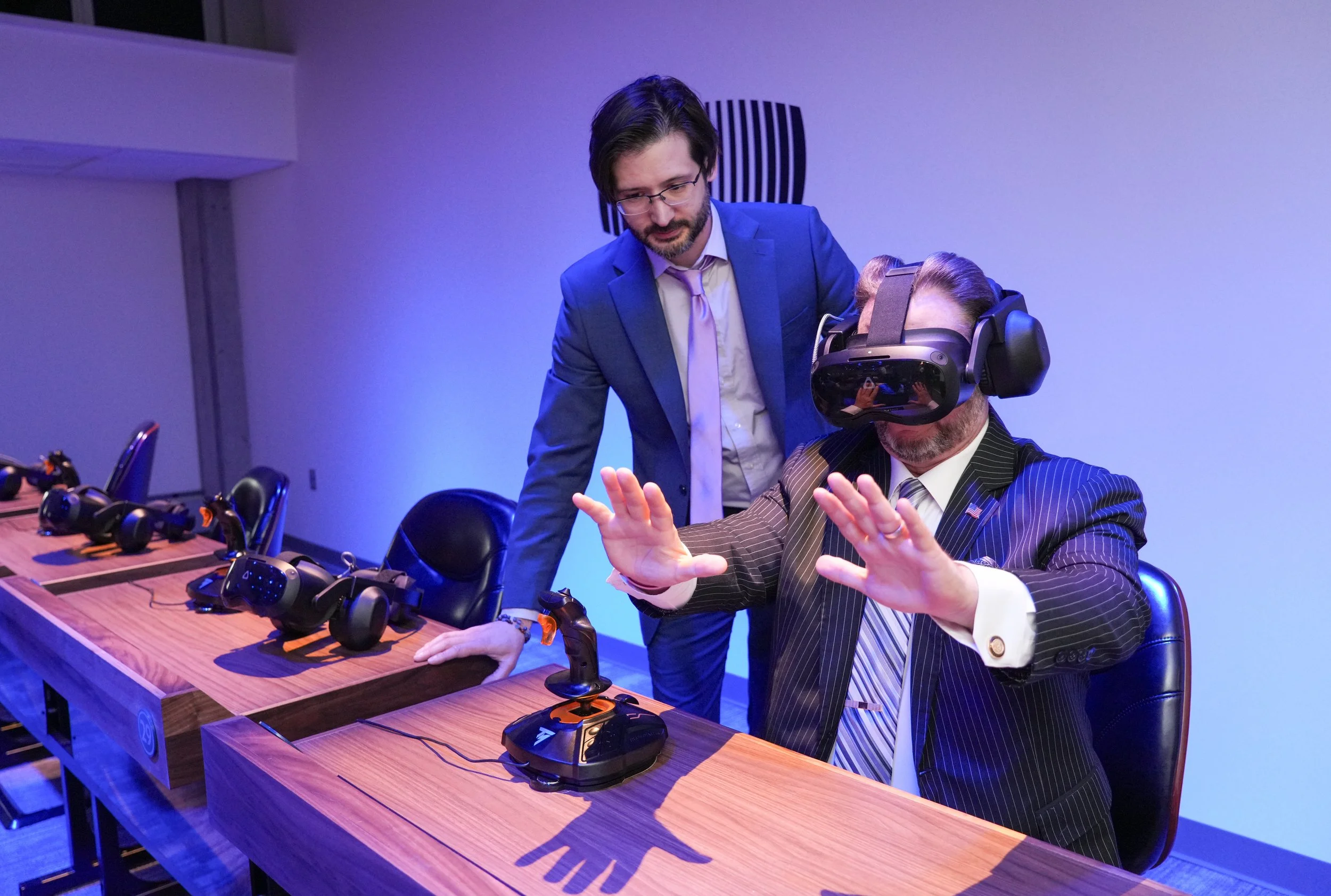
CASCADE is a series of immersive virtual reality modules built for the Dreamscape Learn platform, designed to train personnel in disaster management and multi-agency coordination. By requiring intense decision-making, these simulations place users at the center of large-scale crises where the stakes are simulated, but the pressure is real.
The core mission of CASCADE is to provide a safe, high-fidelity environment for teams to explore the consequences of failure. These modules allow participants to test agency protocols, navigate complex logistics, and evaluate the ripple effects of their choices without real-world risk.
The initiative currently hosts two active modules, with a robust development roadmap planned for 2027 to address a wider array of catastrophic incidents.
Active Modules:
Landfill Disaster Management (West Ridge)
Active Shooter at Liberty State Park.
Future Modules:
Aircraft Crash Investigation
Train Derailment
Deep-Sea Oil Spill Response.
CASCADE | Landfill Disaster Management
The West Ridge Scenario:
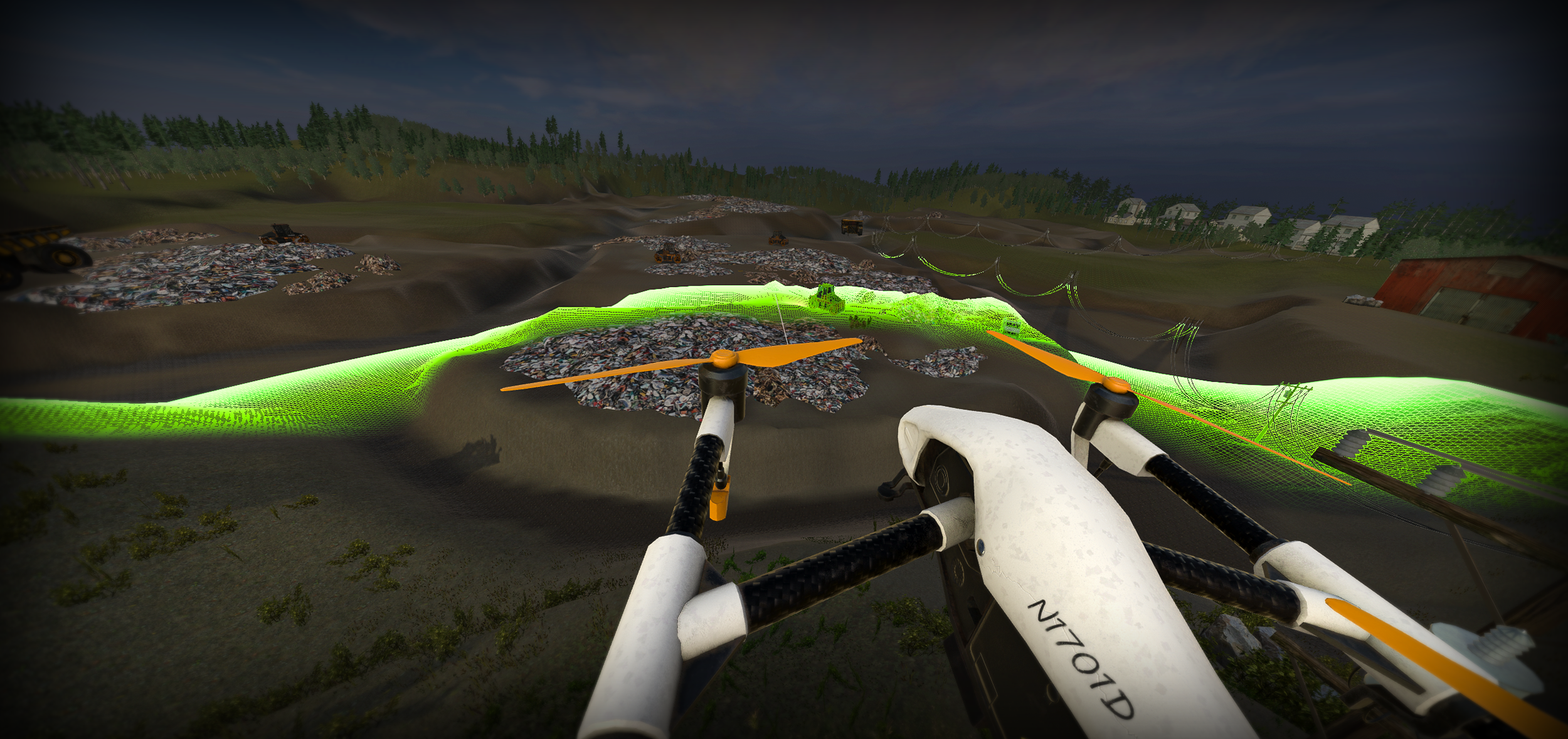
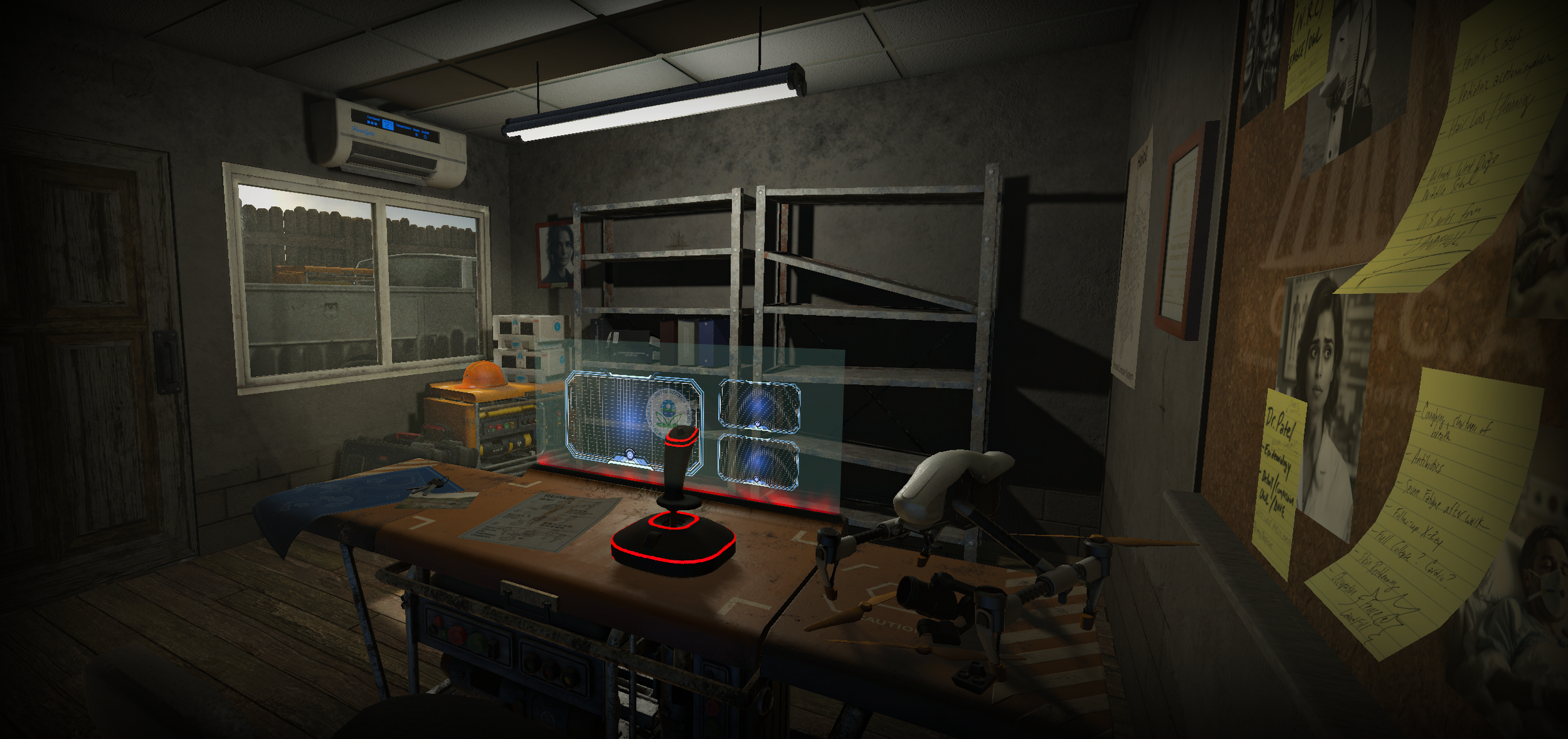
As the introduction to the CASCADE sequence, this module places you in the role of an government employee stationed at the West Ridge remote office. Your mission begins when a news broadcast alerts the community to a burgeoning health crisis, and you are ordered by your director to investigate the site immediately.
The situation escalates during your initial drone discovery when an incoming weather system grounds your flight. With a full hurricane approaching the landfill, you are the only person on-site capable of managing the facility’s response.
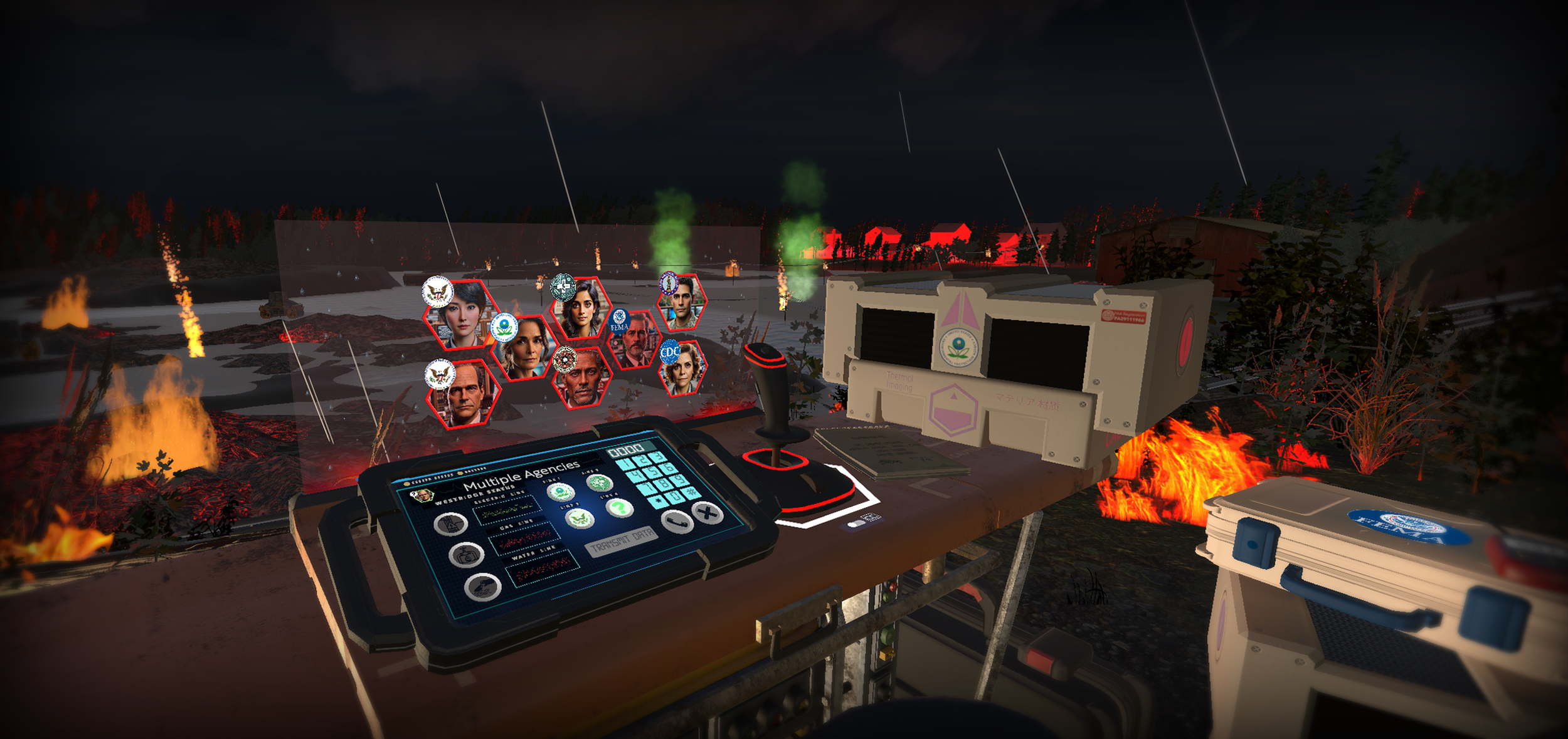
As the storm makes landfall, decision-making control is routed to your "Holo-Q" computer. You must navigate a high-stakes decision to manage failing gas, electrical, and water infrastructure with severely limited resources. In this environment, every decision carries weight, and there are no easy answers. No two participants will have the same experience; the simulation results in a unique outcome for every user, tracked through specific metrics such as death tolls, expenses, and total systemic impact.
Upcoming Academic Deployment
Fall 2026 Integration | Rowan University
CASCADE: Landfill is currently slated for integration into the Rowan University Ric Edelman College of Disaster Science and Emergency Management curricula beginning in the Fall 2026 semester. The module will serve as a foundational immersive experience for students to practice high-stakes decision-making and multi-agency coordination, providing a data-rich environment for empirical learning and program evaluation.
CASCADE | Active Shooter @ Liberty State Park
Multi-Perspective Surveillance & Threat Detection
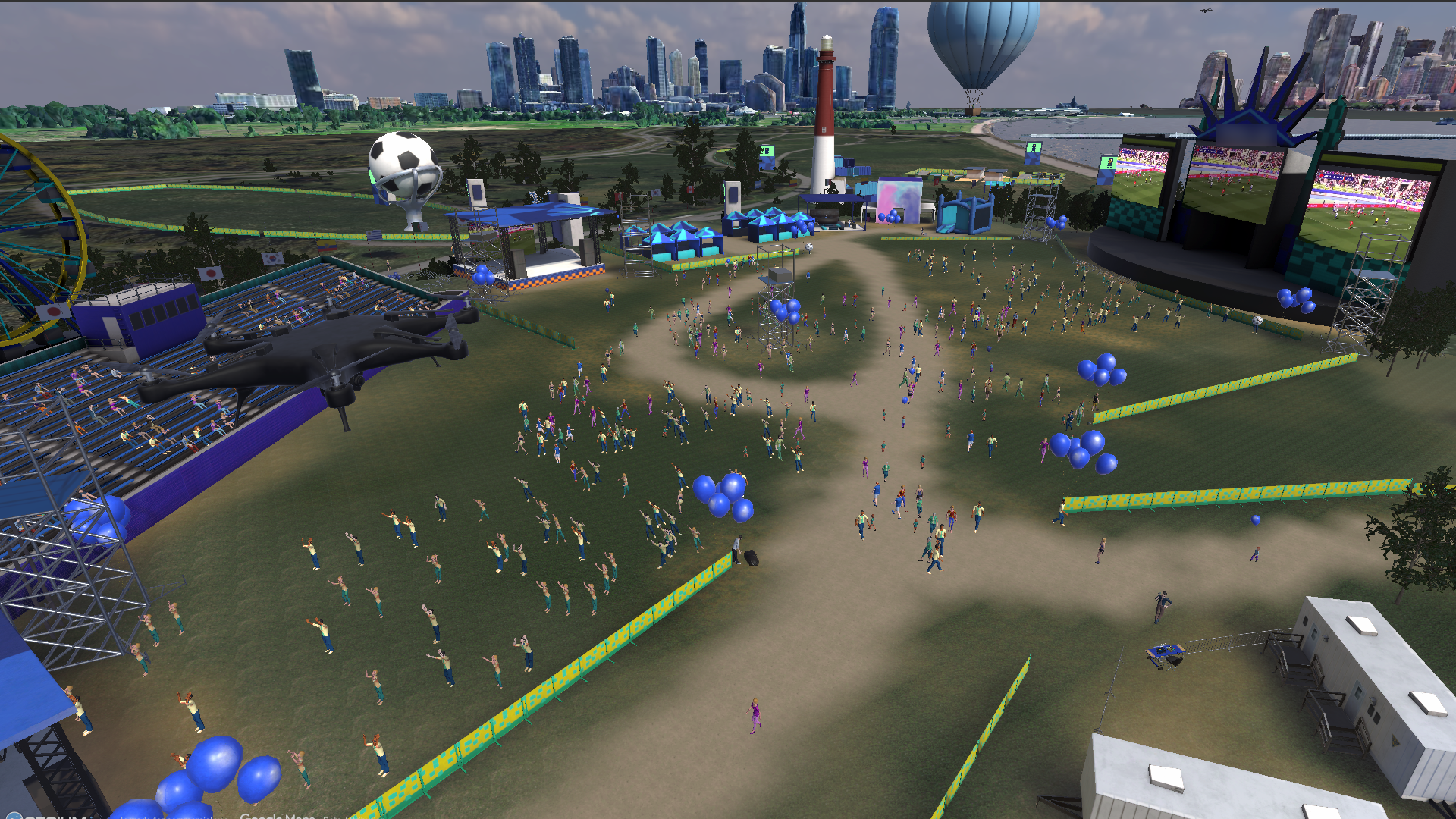
Currently in active prototype development, this module utilizes the landmark setting of Liberty State Park to train users in the critical window of time preceding an incident. Set in a high-density public environment, the simulation focuses on the detection of suspicious behavioral patterns and the deployment of investigative resources.
Multi-Perspective Observation: Participants can toggle between three distinct vantage points: Ground Level (on-foot perspective), Aerial Drone (low-altitude telemetry), and Tactical Helicopter (high-altitude wide-area oversight)—to monitor crowd dynamics.
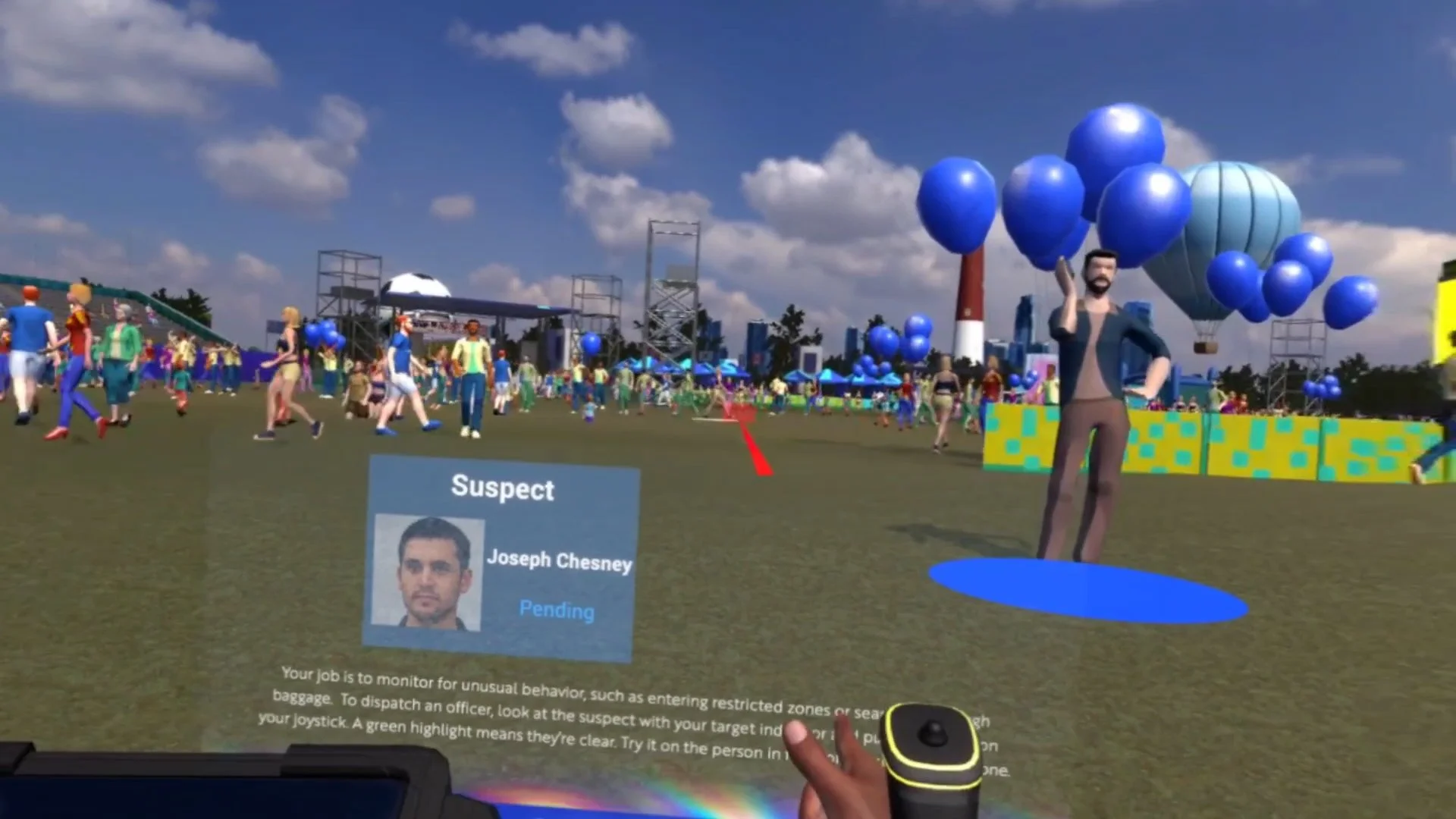
Investigative Selection: Users can actively select individuals within the crowd to initiate targeted searches. This process reveals person-specific data, challenging the player to justify resource allocation based on observed behavioral indicators.
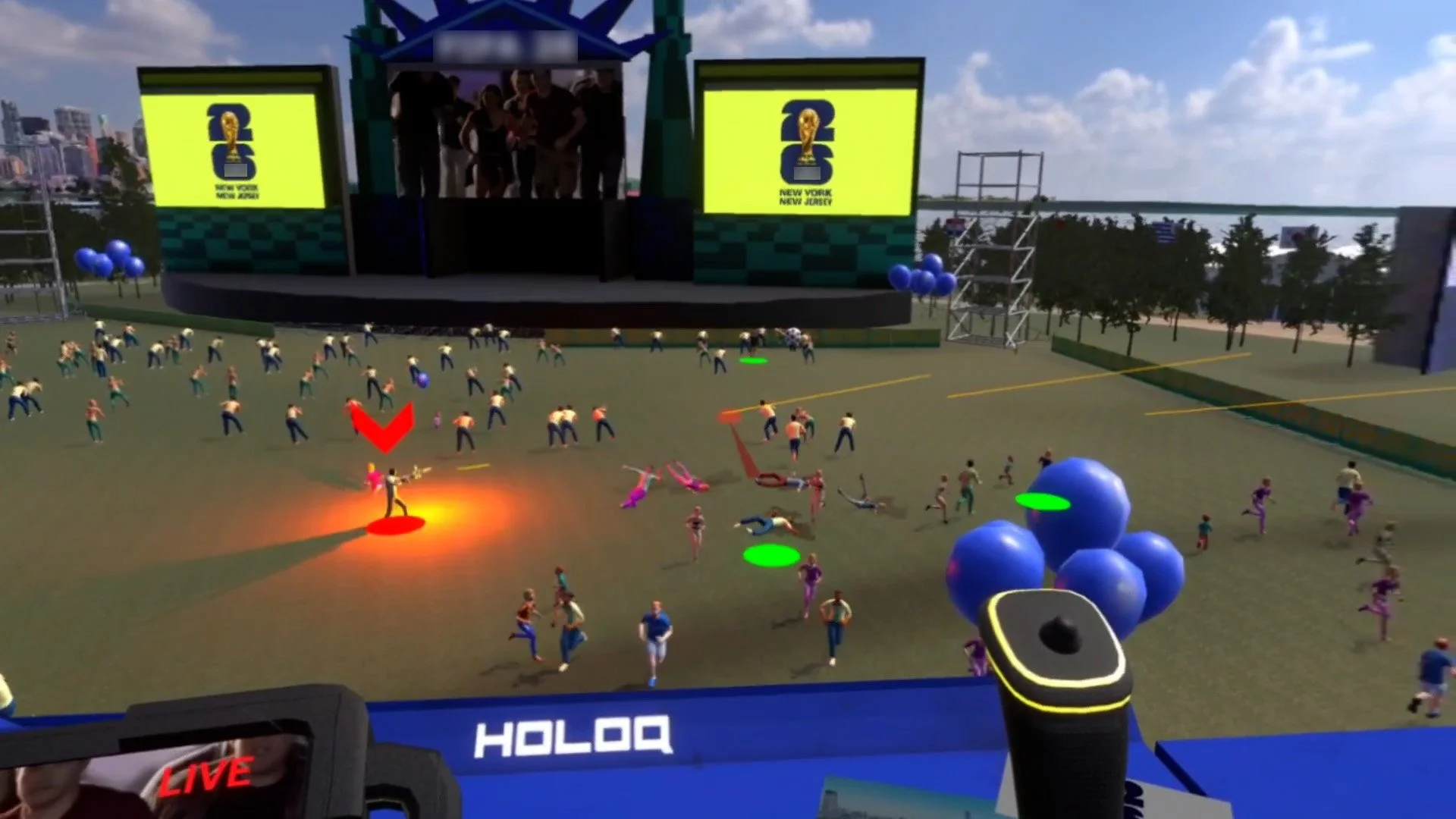
Active Threat Transition: Following the investigative phase, the simulation escalates into a dynamic active shooter scenario, testing the user's transition from surveillance to immediate crisis management.
Development Status:
This module is currently a high-fidelity prototype. Our team is refining the visuals, crowd AI, and the investigative data-overlay system to enhance the training efficacy for law enforcement and public safety personnel.